From Sketch to Stage: Our Fashion Show Design Process
A fashion show set has to hold a crowd's attention for four minutes and photograph beautifully for a decade. Here's how we design for both.
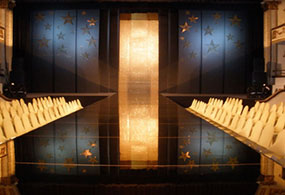
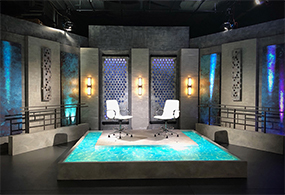
A runway set is one of the strangest design briefs in our business. It's a stage that will be seen live by maybe four hundred people, and then photographed and filmed for millions. It has to hold up for four minutes of runway walk — and then it has to keep holding up, in a magazine spread and a highlight reel, for years.
The brief
We start every fashion project the same way: reading the collection. Not the runway plan, not the venue diagram — the collection. Fabrics, silhouettes, palette, mood. Everything on the runway has to disappear behind the clothes and reappear whenever the camera pulls back.
For a recent Express show, the brief was two words: black and gold. Everything else — scale, materials, lighting, texture — was ours to solve.
Concept sketches
The design lead builds three or four rough concepts in pencil first, then in 3D. We're looking for silhouette against the walk, texture against the fabric palette, and photo geometry that reads from every seat and every camera position.
Materials as costume
The stage is wearing clothes too. For black-and-gold, we mocked up sixteen finishes before landing on a hand-brushed matte black steel and an antique-gold leaf on cast panels. From ten feet, they read as jewelry. From the front row, they read as architecture.
Rigging, invisible
Half of a runway set is the part you can't see. Lighting positions, camera clearances, quick-change egress, sound. We spend more time on that half than the visible half.
Show day
Load-in is choreographed to the minute. Dressers, models, and crew all working around a set built to be moved through at speed. When the first look steps out, everything we've done disappears — which is the highest compliment a fashion set can pay itself.
That's the goal every time. Design the stage so completely that when the clothes arrive, the stage looks like it was always waiting for them.