Designing for the Camera: Broadcast Sets in a 4K World
4K, 8K, and the migration to LED walls have changed what a set has to survive. Here's what we've learned building for lenses that see everything.
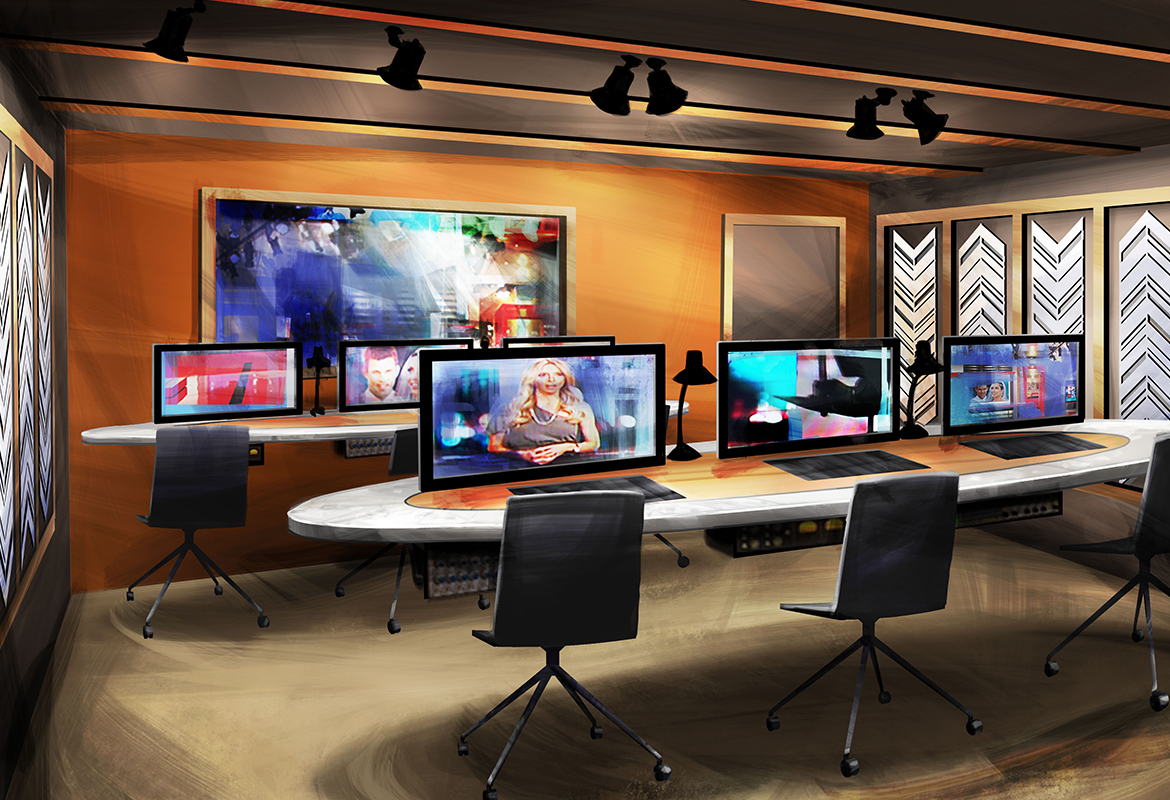
The forgiving era of broadcast set design is over. Ten years ago, a coat of paint and a soft key light could hide a lot. Today, a 4K camera at f/2.8 sees the seam on your gypsum, the pencil line under your primer, and the fingerprint your painter left before lunch.
What's changed
Higher resolution. Wider color gamut. LED walls that require the physical set to color-match a virtual environment behind it. Live shows on streaming platforms that get paused, zoomed, and screencapped.
What we've changed
Finishes. We've quietly retired half a dozen paint products. New palette leans matte, low-gloss, and mixed to reflect the exact color temperature of each studio's key lighting.
Materials. Anywhere a joint used to hide behind camera compression, we now design it out. Welded seams. Continuous surfaces. Integrated hardware.
Modularity. LED walls mean scenic pieces need to move in hours, not days. We've re-tooled hardware and hinge systems across the shop.
What hasn't changed
The camera is the client. Everything we build gets photographed and lit before it leaves the shop. If it doesn't hold up at 4K on our own gear, it doesn't ship.
That's a discipline the resolution wars have made non-negotiable — and we're happy for it. Broadcast sets are better now than they've ever been. Ours are going to keep getting better.